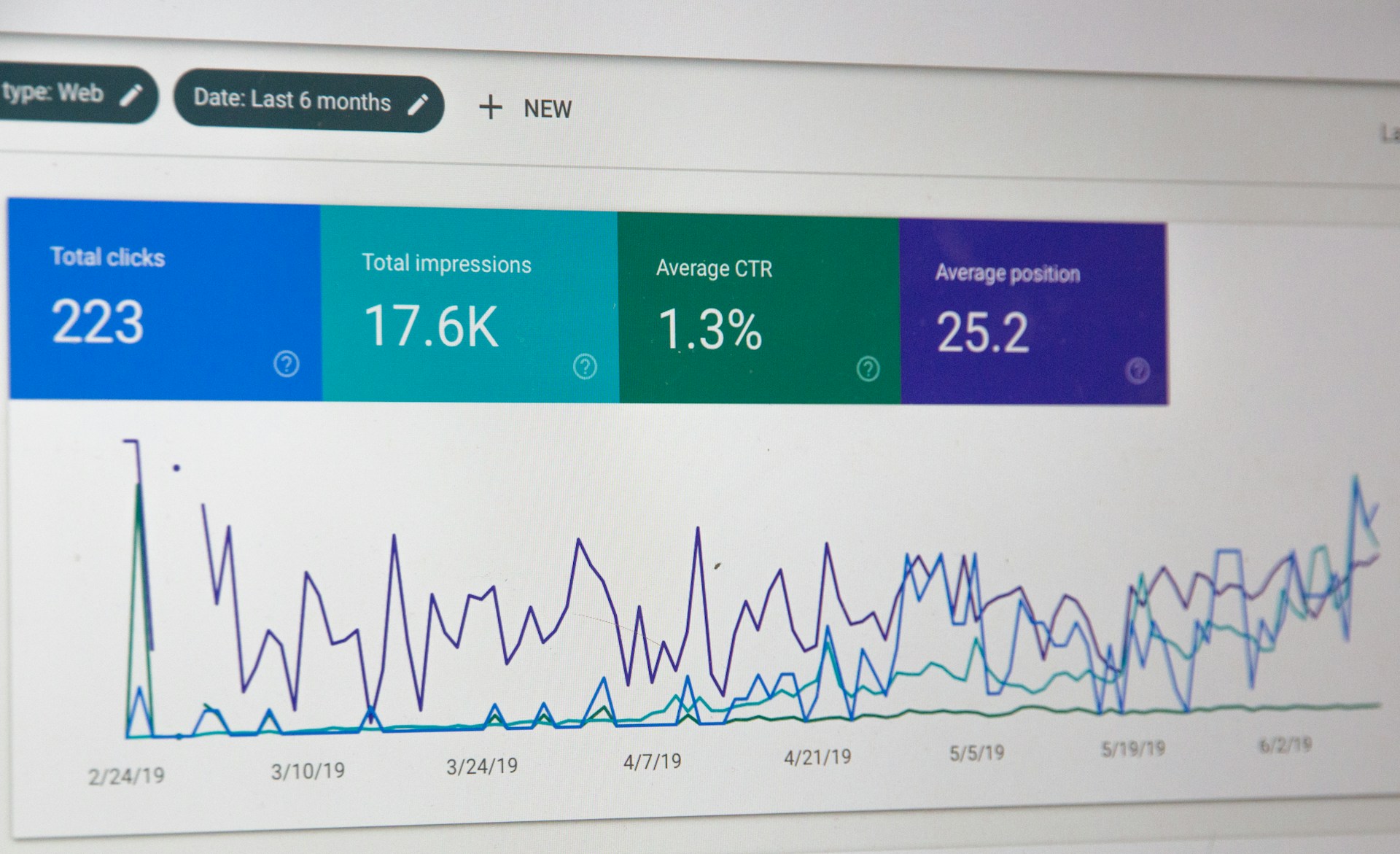

Why Your Google Rankings Stalled (And What Actually Works Now)
Most sites are not stuck in Google because they need “more SEO”. They are stuck because the basics of relevance, quality, and trust are off, and no amount of fiddling with a single meta tag will fix that. If your pages are vague, slow, or hard to trust, Google has easier options to rank above you.
Rankings start to move when you fix how clearly you answer real questions, how usable your site is, and how strong your authority looks from the outside. And there is something bigger happening at the same time. Google is shifting away from being a list of blue links and towards something closer to an answer engine. If you are not thinking about answer engine optimisation, you risk being invisible even when you technically “rank”.
Google Is Now an Answer Engine. Is Your Content Ready?
Open Google and search almost anything useful right now. Before you even reach the traditional results, you will likely see a featured snippet, a People Also Ask box, or an AI-generated summary that pulls from multiple sources into one combined answer. A large share of users read that panel, find what they need, and never scroll further.
This is not a minor shift. It changes what ranking actually means.
Answer engine optimisation is the practice of shaping your content so Google can confidently reuse it as a direct answer. A page that does this well tends to:
- State a clear, direct answer to a specific question early in the copy
- Be structured so Google can extract small, self-contained chunks without losing meaning
- Carry enough depth and credibility that Google is comfortable quoting it to its users
For marketing managers and business owners, the practical implication is straightforward. If your content cannot be lifted cleanly as an answer, Google will skip you in rich results and AI panels, even if you are sitting on page one. You may technically have a ranking, but you are sitting below the sections people actually read.
The businesses that win in this environment are the ones whose pages are genuinely built to answer questions, not just mention topics.
Why Most Content Stalls Before It Even Gets a Chance
Two problems account for most of it, and both are fixable once you can actually see them.
Your Page Dances Around the Question Instead of Answering It
This is the single most common reason well-intentioned content underperforms. The main question a visitor came to have answered is buried halfway down the page. The actual answer, when it finally arrives, is hedged and vague. The opening paragraphs are focused on brand narrative or general context rather than the specific problem someone typed into a search bar.
Answer-first content works differently. It earns attention by being immediately useful.
In practice that looks like:
- Opening with a direct, plain-English answer in the first two or three sentences
- Building supporting detail, examples, and context below that anchor
- Cutting long-winded introductions that make the reader work before they get anything back
A financial planning firm, for example, might have a page titled “Superannuation Advice”. If someone searches “how much super do I need to retire at 60”, that page needs to answer that question directly and quickly, or Google will find a page that does. The firm’s history, values, and service range can come later. The answer comes first.
Your Structure Is Making It Hard for Google to Follow Along
Even good information can underperform when it is poorly organised. Search engines extract answers from pages that are clearly structured. If your key point is buried in paragraph seven of a dense block of text, it may as well not exist, for both Google and the real person trying to skim your page between meetings.
Structuring for answer engine optimisation means:
- Using headings that read like real questions your buyers would actually type
- Writing short paragraphs with one clear idea each
- Keeping one main topic or intent per page, rather than cramming every service into a single URL
- Adding bullet points and subheadings that make the page scannable in thirty seconds on a phone
This is not about simplifying your thinking. Clear structure just makes good thinking easy to follow. When Google can clearly parse what each section of your page covers, it becomes far more likely to surface that section as a direct answer somewhere in the results.
Technical Issues That Can Strangle Good Content
Strong content does not rank in a vacuum. It ranks on top of a technical foundation, and if that foundation has cracks, even genuinely useful pages will struggle to compete.
The issues that cause the most silent damage tend to be:
- Slow load times, particularly on mobile, on the pages where you most need to convert visitors
- Messy URL structures where multiple versions of the same content exist and split authority between them
- Important service or product pages buried deep in menus with no internal links pointing to them
- Missing or duplicated page titles and meta descriptions that give Google nothing useful to work with
A practical check worth running on your own site:
- Can you reach your main service pages in three clicks or fewer from the homepage?
- Do your priority pages load quickly on a mid-range mobile device on a standard connection?
- Are obvious schema types in place where they make sense, such as FAQ schema on pages with question-and-answer sections, or Local Business schema for location-based services?
Schema markup is worth a specific mention here because it connects directly to answer engine optimisation. When you mark up your content with structured data, you are giving Google an explicit map of what each section means. That clarity makes it significantly easier for Google to pull your content into featured snippets, knowledge panels, and AI summaries with confidence.
Clean technical foundations are not glamorous work. But they are the difference between content that competes and content that sits quietly on page three wondering what went wrong.
Why Google Still Does Not Fully Trust Your Site
Trust is earned from two directions. Here is what genuinely builds it, and what can hold you back.
Links and Authority Are Still a Fundamental Signal
Google ranks pages it trusts. Trust is built, in large part, when other relevant and reputable sites are willing to reference you. If no credible source is linking to your content, Google treats you as a riskier answer to surface to its users.
The approaches that consistently fail to build real authority:
- Bulk directory submissions across random, unrelated sites
- Guest posts on low-quality blogs with no genuine audience, placed purely for a link
- Any service promising fast, automated link acquisition at scale
The approaches that actually move the needle over time:
- Links from industry associations, suppliers, business partners, or local media outlets that are genuinely relevant to what you do
- Content that earns references naturally because it is genuinely useful, such as practical how-to guides, comparison tools, or well-structured explainers that other sites want to point their readers toward
- Relationship-building within your niche so that relevant sites see you as a credible source worth mentioning
Local Trust Signals Matter More Than Most Businesses Realise
For businesses serving a specific region or city, authority is also built through consistency and presence across local signals. This includes:
- Your business name, address, and phone number listed consistently across every directory and platform where you appear
- A complete, active Google Business Profile with current photos, services, and regular responses to reviews
- A steady accumulation of genuine customer reviews that mention your services and location in natural language
These signals feed directly into how confident Google feels using your business as a source in a local answer. A business with 50 consistent citations and 80 genuine reviews will almost always outperform a competitor with better copy but a neglected local presence.
Stop Chasing Vanity Rankings and Measure What Actually Matters
Many marketing teams spend significant energy tracking a small handful of broad, competitive keywords that look impressive in a monthly report but rarely connect to actual revenue. A law firm tracking its ranking for “lawyer” is measuring something that will never move meaningfully and would not convert well even if it did.
A more useful frame for measuring ranking progress:
- High-intent queries where someone is clearly close to making a decision, not just researching broadly
- Questions and topics that span the full customer journey, from early research through to being ready to have a conversation
- Long-tail searches that precisely match what your specific services solve, even if the individual search volumes are modest
Rather than watching average position for a short list of trophy terms, track:
- Organic leads or enquiries generated from your key service pages
- Growth in relevant, specific traffic that actually reflects your ideal customer
- How frequently your pages appear in answer-type results such as featured snippets, People Also Ask entries, and FAQ rich results
This approach fits naturally with answer engine optimisation. The goal is to be the clearest, most trusted answer wherever your buyer is searching, across every stage of their journey, not just in the traditional list of ten blue links.
Quick FAQ for Busy Marketers
Two questions come up more than any others, so here is a straight answer to each.
Q: How Long Will It Take to See Better Rankings?
A: If your site is in reasonable shape technically, you can often see early movement within a couple of months once you address core relevance and on-page clarity issues. More substantial gains tend to build over a longer period, particularly in competitive industries.
Fixing crawl problems, page speed, and content structure often produces visible impact faster than link-building, which is a slower, compounding play that pays off over six to twelve months rather than weeks.
Q: Do We Need an Agency, or Can Our Team Handle This?
A: In-house teams are often well-placed for content creation, subject matter expertise, and straightforward on-page updates. External support tends to add the most value on technical audits and fixes, strategic prioritisation, ongoing answer engine optimisation, and authority-building work that requires outreach and relationship management.
Many businesses find a hybrid model works well: internal teams create and publish, while an outside partner handles strategy, auditing, and the heavier technical and link-building tasks.
How to Fix Your Rankings Without Burning Your Whole Quarter
Rankings improve when you become the clearest, most trusted answer to specific problems and make it easy for Google to find, load, and verify that answer. It is less about doing more SEO tasks and more about aligning relevance, technical fundamentals, and authority around the questions that actually lead to revenue.
A practical 90-day outline to get moving:
Month 1: Audit and fix technical basics on your priority pages. Improve load speed and mobile usability. Rewrite key page headings and opening sections so each page clearly answers one specific question in plain language.
Month 2: Strengthen internal linking between related pages. Add structured FAQ sections to your most important service pages. Begin a focused authority push with a realistic shortlist of link and brand mention opportunities, starting with partners, suppliers, and relevant local directories.
Month 3: Review which pages are gaining visibility and generating enquiries. Double down on those pages with fresh supporting content that goes deeper on related questions. Expand your answer-focused content to cover the surrounding questions your buyers are asking at each stage of their journey.
Ready to Show Up Where Your Customers Are Actually Searching?
If you are ready to get in front of customers wherever they search, we can help you map out a practical answer engine optimisation strategy that suits your goals and budget.
At Your Digital Solution, we focus on meaningful improvements that make it easier for people to find and trust your business. Tell us what you want to achieve and we will outline clear next steps, timelines and priorities. To get started, simply get in touch.